

Global take on jobs and human resources news
Provided by AGP
California Arts Council Presents First Sector-Specific Creative Economy Strategic Plan to Joint Committee on the Arts
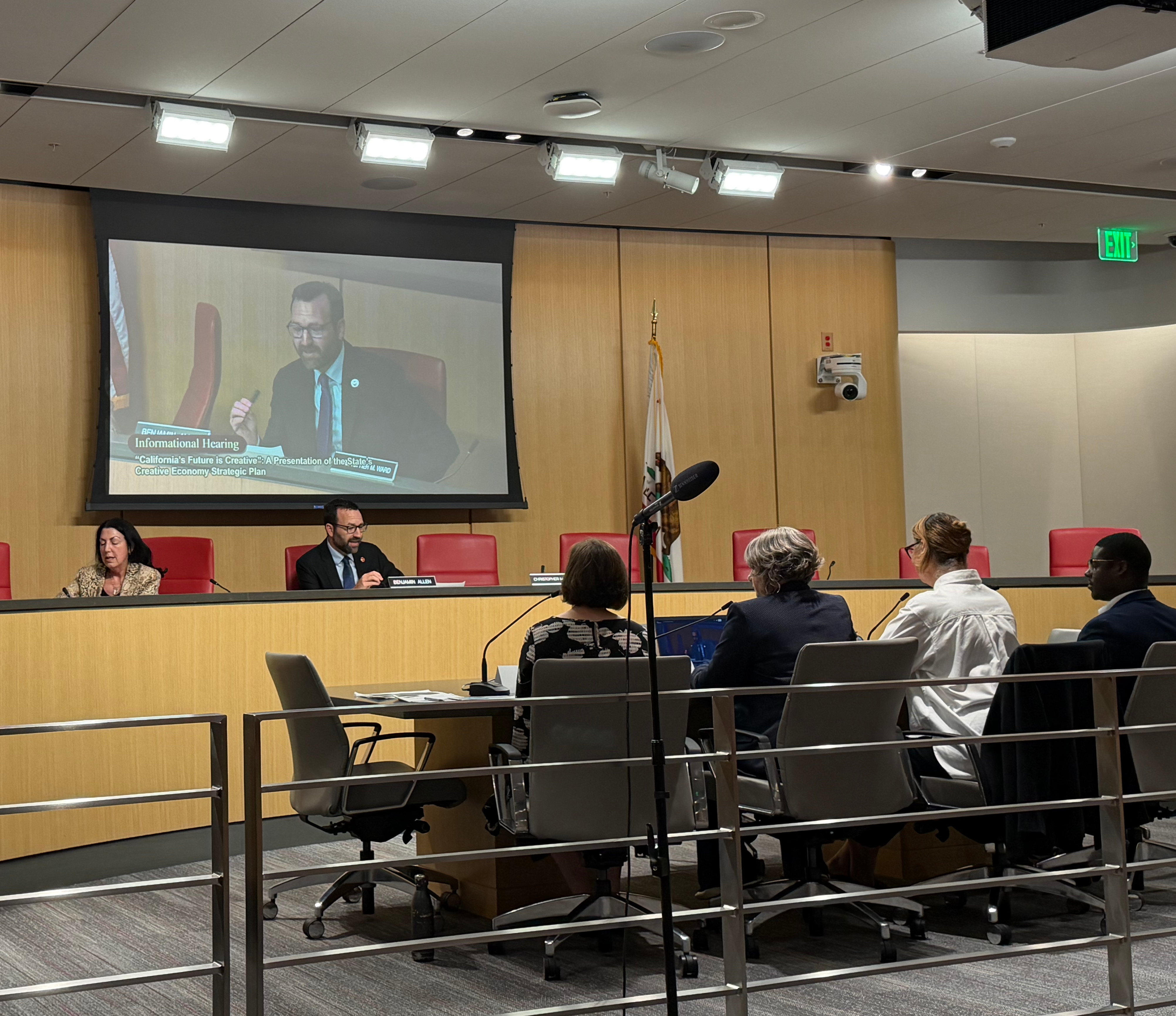
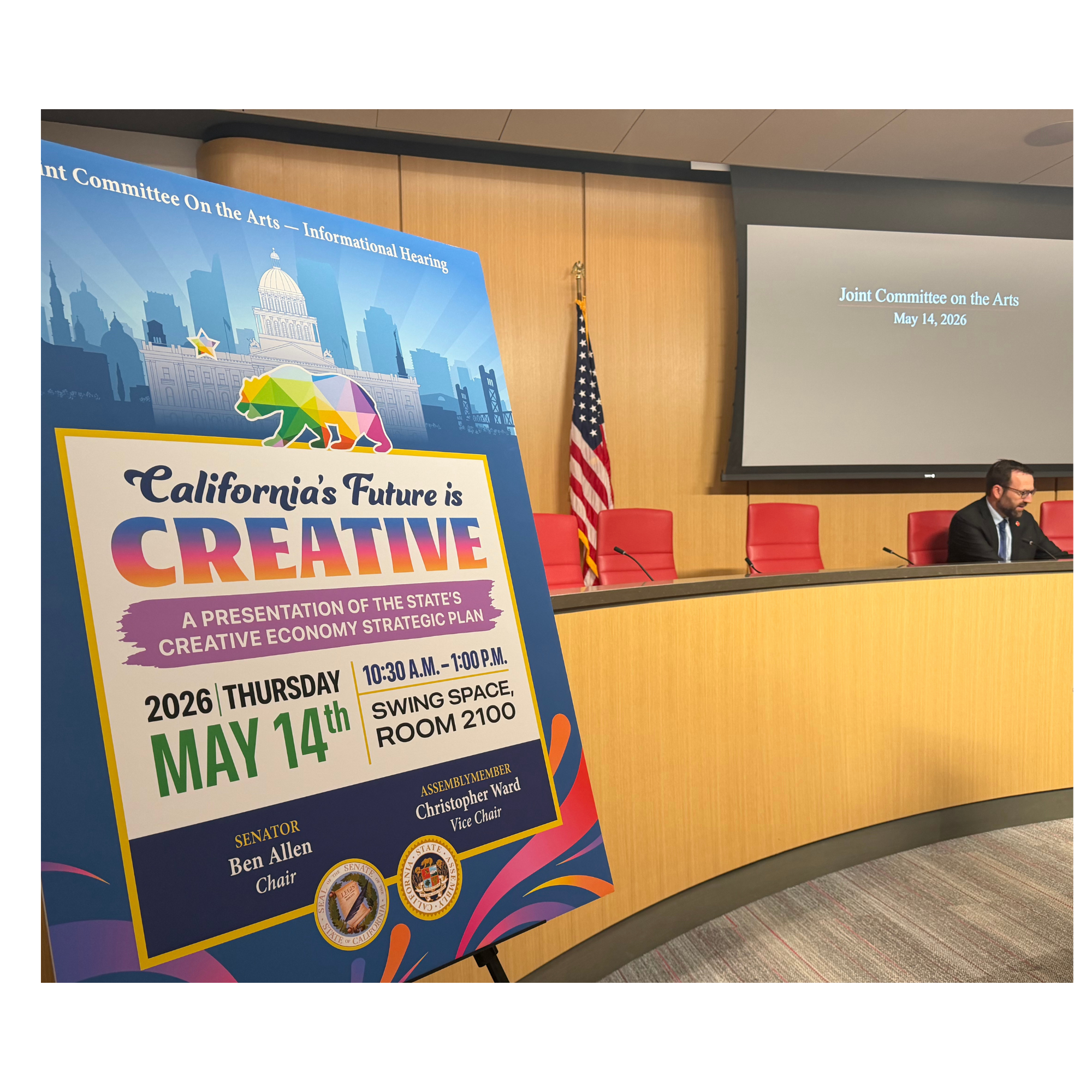
State leaders, creative economy experts, artists, and advocates advance vision for inclusive and resilient creative economy to Joint Committee on the Arts.
“California’s creative economy is not just a cultural engine; it’s an economic powerhouse.” ”
SACRAMENTO, CA, UNITED STATES, May 15, 2026 /EINPresswire.com/ -- The California Arts Council presented the first-ever sector-specific strategic plan: California’s Future is Creative: Strategies for Cultural Resilience, Economic Growth, and Global Leadership before the Legislature’s Joint Committee on the Arts, chaired by Senator Ben Allen and Vice Chair Assemblymember Christopher Ward. The hearing brought together state leaders, agency partners, creative economy experts, artists, advocates, and cultural leaders to present the plan’s six key recommendations, share local and expert feedback, and what the next steps are for implementation. — Senator Ben Allen, Chair of the Joint Committee on the Arts
The plan is guided by a bold vision for California: to lead an inclusive and resilient creative economy that empowers artists, cultural workers, and entrepreneurs to drive culture, creativity, and innovation. Established under AB 127, the Creative Economy Workgroup was charged with developing a statewide strategy to attract creative economy business, retain talent, develop marketable content for national and international audiences, reach marginalized communities, and reflect California’s diversity.
California’s creative economy is one of the state’s defining economic engines. According to the National Endowment for the Arts, arts and cultural production added $288.9 billion to California’s economy, representing 7.5% of the state economy, and supported 821,183 arts and cultural jobs, with workers earning $136.2 billion in wages and benefits.
“California’s creative economy is not just a cultural engine; it’s an economic powerhouse,” said Senator Ben Allen, Chair of the Joint Committee on the Arts.
“The creative work is happening, but perhaps not at scale. And that is where the opportunity is,” said Danielle Brazell, Executive Director of the California Arts Council. “This plan gives California a way to meet that opportunity with intention, investment, and partnership.”
“Artists are not just painters, actors, and dancers,” said Roxanne Messina Captor, Chair of the California Arts Council. “The experience of being an artist plays a profound and significant role in an individual’s ability to work and supports workforce development.”
Speakers emphasized that California’s creative businesses and workforce is central to the state’s economic competitiveness, resilience, and quality of life — and that artists and cultural workers are problem solvers whose work intersects with climate resilience, mental health, aging, education, civic connection, and community well-being.
“Artists are the problem solvers to many of the challenges we are facing today,” said Alejandro Gutierrez Chavez, Executive Director of Arts Connection – The Arts Council of San Bernardino County. “The state has the opportunity to unlock the potential to put artists to work — not only in their existing work, but in how they contribute to climate resiliency, mental health, senior citizens, and the wellbeing and connection of our communities. Artists have human-centered solutions.”
Senator Tasha Boerner attended the hearing and spoke before the Committee and panelists to underscore the essential role of art in human life and California’s economy. “Art is the soul of who we are; there is no human society that has ever existed without art,” Boerner said. “The creative economy is not just influencers or Instagram. It is a job where you can earn a living and a good wage in California.”
“This plan is not merely a set of recommendations; it is a vital, urgent blueprint to protect what makes California a capital of innovation and culture,” said Julie Baker, CEO of California for the Arts and California Arts Advocates.
The planning process has already extended beyond the Capitol. Phase 2 included public engagement through 26 town halls across eight regions, reaching more than 1,100 people and generating 280+ participant survey responses. Participants identified the need for better access to information, services, and resources; new financial models; shared definitions and data; stronger advocacy; and deeper networks and partnerships.
The hearing featured three panels focused on the breadth of California’s creative economy, building a resilient creative future, and implementation. For more information about each panelist click HERE.
Next steps include advisory and interagency work to define implementation needs, mapping existing resources and initiatives, tracking state and local successes, modeling creative economy industry cluster definitions, piloting neighborhood-level data tools, and developing a detailed implementation plan with timelines, responsibilities, and resource requirements.
As California confronts rapid technological change, affordability pressures, climate disruption, and shifting workforce needs, the plan positions creativity as both an economic strategy and a public good — and calls for a coordinated, cross-agency approach to ensure California’s creative economy remains inclusive, resilient, and globally competitive.
About the Creative Economy Workgroup (CEW) & Strategic Planning Process: The Creative Economy Workgroup (CEW) was established by California Assembly Bill 127 (AB127) and tasked with developing a strategic plan for the state’s creative economy. The California Arts Council (CAC) led the strategic planning process, and its nonprofit partner, Institute for the Future (IFTF), facilitated meetings of the CEW and led an extensive research process. and tasked with developing a strategic plan for the state’s creative economy. The California Arts Council (CAC) led the strategic planning process, and its nonprofit partner, Institute for the Future (IFTF), facilitated meetings of the CEW and led an extensive research process.
Stay connected! Sign up for the ArtBeat e-newsletter.
About the California Arts Council
The California Arts Council is a state agency committed to strengthening arts, culture, and creative expression as tools to cultivate a better California for all. Through grants, initiatives, and services, CAC supports local arts infrastructure statewide and envisions a California where all people flourish with universal access to and participation in the arts. View members or learn more at www.arts.ca.gov.
The California Arts Council is committed to increasing the accessibility of its online content. For language and accessibility assistance, visit https://arts.ca.gov/about/about-us/language-communications-assistance. To read this announcement in Spanish, please use the website’s Google Translate tool by clicking the “Translate” link in the upper righthand corner of this page.
El Consejo de las Artes de California se compromete a aumentar la accesibilidad de sus contenidos en línea. Para obtener ayuda con el idioma y la accesibilidad, visite https://arts.ca.gov/about/about-us/language-communications-assistance. Para leer este anuncio en español, utilice la herramienta Google Translate del sitio web haciendo clic en el enlace “Traducir” situado en la esquina superior derecha de esta página.
Public Affairs
California Arts Council
publicaffairs@arts.ca.gov
Legal Disclaimer:
EIN Presswire provides this news content "as is" without warranty of any kind. We do not accept any responsibility or liability for the accuracy, content, images, videos, licenses, completeness, legality, or reliability of the information contained in this article. If you have any complaints or copyright issues related to this article, kindly contact the author above.
